

Picture this: You're 55 years old and you've been senior pastor for twelve years. Your board chair just turned 62. Everyone knows this conversation needs to happen. But somehow, every time it almost comes up, someone changes the subject.
🎧 Listen to this episode:
The succession planning discussion that never quite happens.
Sound familiar?
If you're nodding your head, you're not alone. In fact, you're part of a pattern that's playing out in churches across the country—one that's creating more problems than it solves.
The Magical Thinking That's Hurting Your Church
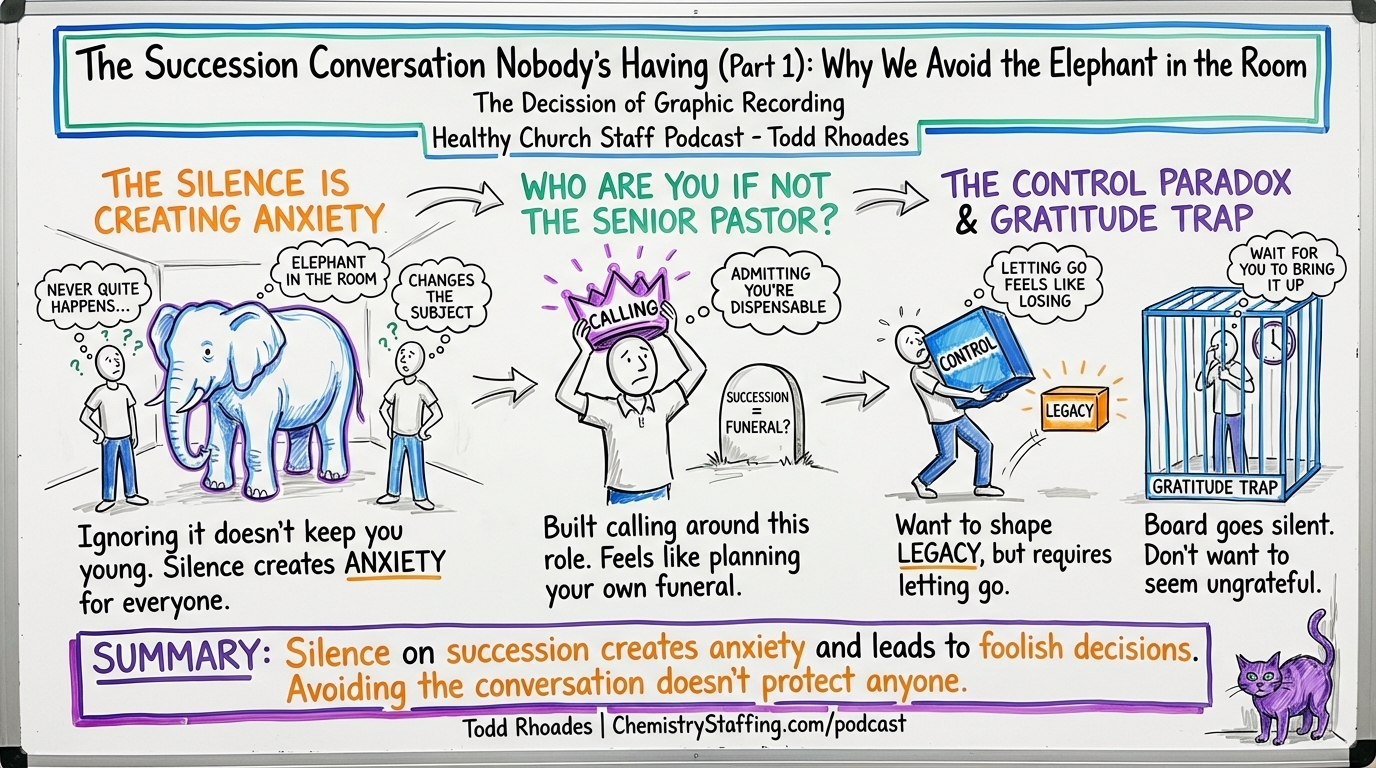
We act like succession planning is bad luck, as if talking about it makes retirement happen faster or ignoring it keeps us young and irreplaceable forever. But here's what's actually happening when we avoid these conversations: the silence is creating anxiety for everyone involved.
And that anxiety? It's making some very smart, well-intentioned people act foolishly.
"Succession silence isn't protecting anyone—it's putting everyone at risk."
When church leaders avoid succession planning conversations, we're not preserving stability. We're creating a powder keg that will eventually explode, often at the worst possible moment.
Why Senior Pastors Stay Silent
Let's be honest about what's really driving this avoidance. For senior pastors, succession planning hits some deep psychological nerve centers.
The Identity Crisis
Who are you if not the senior pastor? For many leaders, their entire sense of calling has been built around this role. Talking about succession feels uncomfortably close to planning your own funeral. Even thinking about training someone to potentially replace you feels like admitting you're somehow dispensable.
This isn't vanity—it's human nature. When your identity and your role become so intertwined, separating them feels threatening at a core level.
The Control Paradox
Here's the kicker: you want to shape your legacy and ensure your church thrives after you're gone. But succession planning requires you to start letting go of control, and letting go feels like losing before you're ready.
Wanting to finish strong isn't selfish—it's natural and good. But avoiding the conversation isn't protecting your legacy; it's jeopardizing it.
Why Boards Go Silent Too
Meanwhile, your board often falls into their own trap of avoidance, creating what I call the "politeness deadlock."
The Gratitude Trap
You've been a good pastor. Your board doesn't want to seem ungrateful by planning your exit, so they wait for you to bring it up first. But you're not going to bring it up—you're waiting for them to signal it's time. It's the classic conflict of courtesy.
The Loyalty Paralysis
Nobody wants to be the person who suggests the pastor should start thinking about leaving. It feels disloyal, like picking a scab or starting an unnecessary fight. So everyone stays quiet and hopes someone else will go first.
Scripture Reflection
Proverbs 27:14 reminds us: "Plans fail for lack of counsel, but with many advisers they succeed." Avoiding difficult conversations often leads to poor outcomes, while seeking wisdom through discussion brings success.
The Hidden Cost of Succession Silence
Here's what many leaders don't realize: your staff is watching this dynamic play out. They're learning that hard conversations get avoided in your church. They're wondering whether leadership development is actually valued or just something you include in vision statements.
When succession planning becomes the elephant in the room, it sends unspoken messages about:
- How your church handles difficult conversations
- Whether leadership development is truly a priority
- The health of communication between senior leadership and governance
- Your church's preparedness for inevitable change
A Reality Check That Changes Everything
Here's the reframe that can shift this entire conversation: Healthy succession planning isn't about leaving—it's about loving your church enough to think beyond yourself.
Every great pastor eventually stops being a pastor. Every single one. The question isn't if that will happen; it's whether you'll plan well for it or just let it happen to you.
"The churches that do succession well start talking about it early, not when crisis forces their hand."
Your Challenge This Week
I'm not asking you to solve succession planning in the next seven days. Instead, I want you to take one specific action: have an honest conversation about timeline.
Before you have that conversation with others, spend some time thinking about it yourself. Then:
- If you're a senior pastor: Ask your board chair when they think you should start planning for succession
- If you're a board chair: Ask your pastor what their long-term timeline looks like
- If you're on staff: Consider how you can contribute to a culture where these conversations happen naturally
The goal isn't to solve everything—it's simply to break the silence.
Discussion Questions for Your Team
- When you think about succession planning in our church context, what emotions or concerns immediately come to mind?
- How comfortable is our church culture with discussing change and transition?
- What fears might be driving avoidance of succession conversations in church leadership?
- What would be the benefits if succession planning became a normal, ongoing conversation rather than a crisis-driven necessity?
What Comes Next
Breaking the silence around succession planning is just the first step. The churches we work with at Chemistry Staffing that handle succession well don't just talk about it eventually—they make it part of their ongoing leadership development culture.
This conversation requires wisdom, timing, and often outside perspective. If you're ready to move past avoidance and start having productive succession conversations, don't try to figure it out alone.
Remember: succession planning done well isn't about managing decline—it's about stewarding growth. It's about ensuring that the ministry God has built through you continues to flourish long after your season of leadership ends.
The silence isn't protecting anyone. It's time to start talking.
Ready to break the silence? Share your thoughts, questions, or challenges with succession planning by emailing us at podcast@chemistrystaffing.com. We'd love to hear how this conversation resonates with your leadership context.