
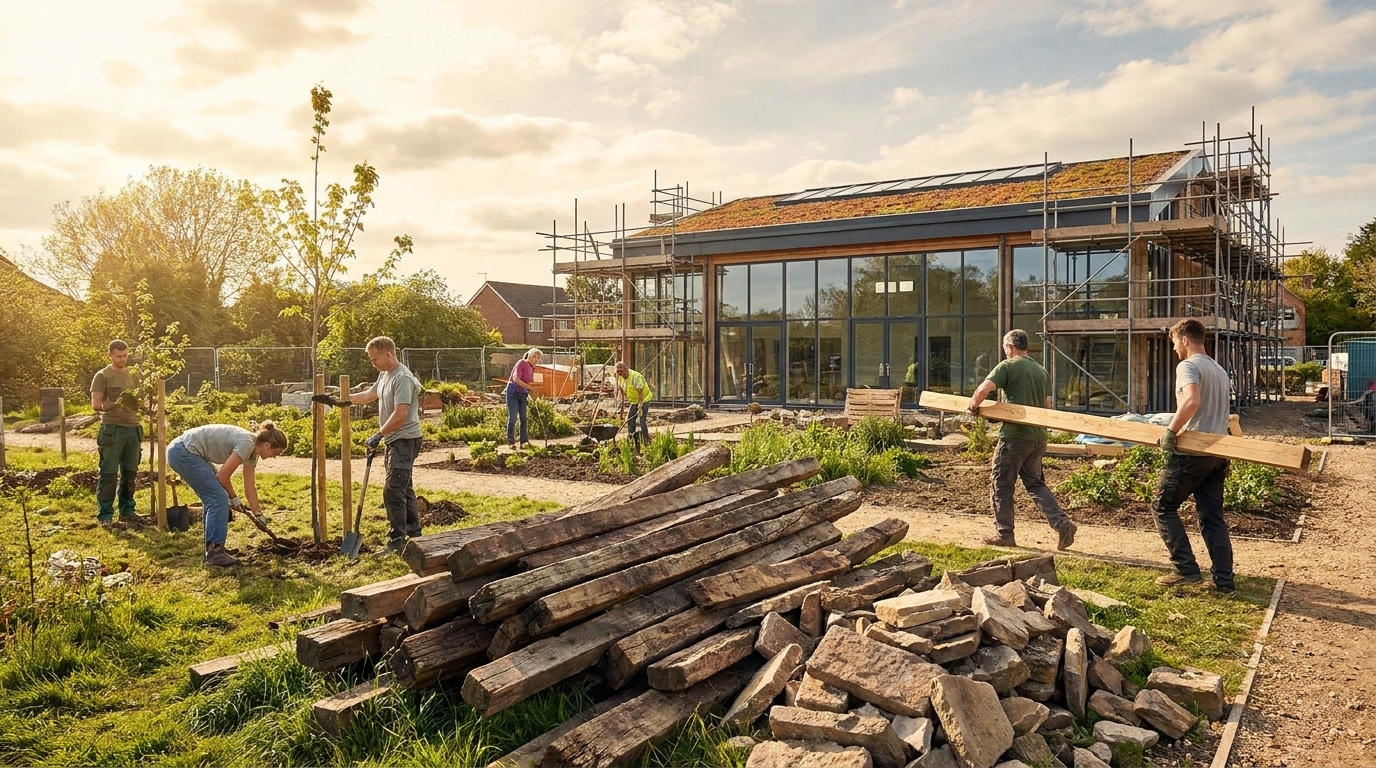
It doesn't have to end at the headline. Yes, churches fall, leaders fall, trust shatters, people leave—but that's not always the end of the story.
🎧 Listen to this episode:
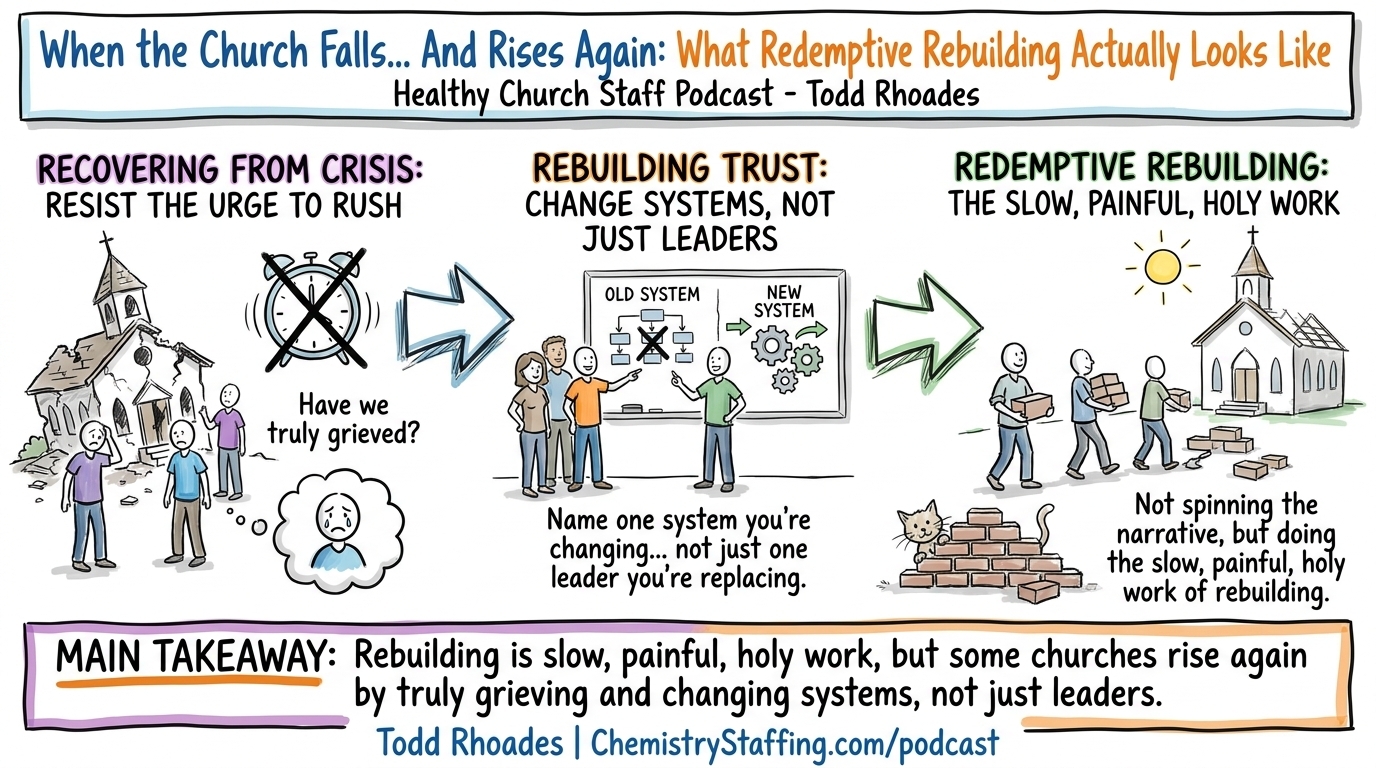
Some churches rise again. Not by spinning the narrative or rushing to recovery, but by doing the slow, painful, holy work of rebuilding. If your church has faced crisis, scandal, or devastating loss, this is for you.
Every day, I see the headlines. Another pastor arrested. Another church shutting down. Another ministry imploding. It's heartbreaking, and as church leaders, these stories hit close to home. We think of Mars Hill—they hit crisis and closed shop quickly. But other churches take a different path.
They choose the long, hard work of rebuilding. It's holy work. It's gut-wrenching work. But it's possible, and it's biblical.
1. Rebuilding Starts with Truth—Not Spin
Here's the most important thing I'll share with you: You can't heal what you won't name.
I've seen churches go through crisis on Sunday, and by the next Sunday, you'd never know it happened. They've appointed a new pastor, moved on, and act like nothing occurred. Think of that scene in Airplane where Leslie Nielsen stands in front of explosions, car crashes, and fires saying, "Nothing to see here, nothing to see here."
Churches that minimize what happened rarely rebuild successfully. Churches that rise again do something different—they acknowledge the pain and own the failure, no matter how difficult it is.
They stop protecting reputations and start protecting people. Because truth is where trust begins to grow back.
"Then I said to them, 'You see the trouble we are in: Jerusalem lies in ruins, and its gates have been burned with fire. Come, let us rebuild the wall of Jerusalem, and we will no longer be in disgrace.'" - Nehemiah 2:17
Notice what Nehemiah did first—he acknowledged the reality. "You see the trouble we are in." No spin. No minimizing. Just truth.
2. Lament Comes Before Vision-Casting
This comes from an Old Testament word we rarely use anymore: lament. You need to lament before you start casting the new vision.
There is a time to grieve. Don't skip it.
- Don't launch a capital campaign to distract from the crisis
- Don't rebrand your way out of the wreckage
- Don't rush to hire the next pastor
Sit in the loss. Absorb it. Let people cry. Let people be angry. Lament is the language of spiritual honesty, and it's what prepares the soil for something new.
Churches that skip lament rarely rebuild the trust they need for the next chapter of ministry.
"Because of the Lord's great love we are not consumed, for his compassions never fail. They are new every morning; great is your faithfulness." - Lamentations 3:22-23
Even in the book called Lamentations, hope emerges—but only after honest grief.
3. Rebuilt Trust Is Stronger Than Borrowed Trust
When a church comes back from a fall, the trust that gets rebuilt is different. It's earned, not assumed. It's tested, not theoretical.
You might have assumed trust before the crisis. You can't assume trust anymore—you have to earn it. And here's the beautiful part: rebuilt trust is actually stronger than the trust you had before.
Churches that do this well don't try to recreate what they had before. They build something new with:
- Healthier systems of accountability and transparency
- Stronger oversight from boards and outside advisors
- Humbler leadership that acknowledges past failures
This isn't damage control—this is redemption. During your time of lament, conduct what I call a "ministry autopsy." Look back and understand what happened and how to ensure it never happens again.
Key Questions for Your Ministry Autopsy:
- What systems failed or were absent?
- Where was accountability lacking?
- How did pride or power contribute to the crisis?
- What warning signs did we miss?
- Who was hurt, and how can we make amends?
4. Redemption Is Possible—But It Takes Time
I've seen churches that fell hard and rose even stronger. But it wasn't because they hired a PR firm or found a quick fix. It was because they did the slow work:
- They brought in outside help and counsel
- They listened to victims and those who were hurt
- They changed the systems that allowed the failure
- They gave people time—time to heal, time to doubt, time to come back
God specializes in resurrection, but resurrection is not instant. Even Jesus was in the tomb for three days.
"Therefore, if anyone is in Christ, the new creation has come: The old has gone, the new is here!" - 2 Corinthians 5:17
Your Next Steps Forward
The fall doesn't have to be the final chapter. Churches can rise again—if they're willing to do the hard work of redemption.
If your church is recovering from a crisis, resist the urge to rush. Ask yourself: "Have we truly grieved? Do we even know what we're grieving?"
If you're rebuilding trust, name one system you're changing, not just one leader you're replacing.
Discussion Questions for Your Team:
- What's one thing in your personal life that you've had to "rebuild" that ended up better than the original?
- Are there areas in our current ministry where we might be trying too hard to "restore" something old instead of allowing God to build something new?
- How can we create a culture where it's safe to acknowledge when something isn't working?
- What would it look like to approach our next challenge with a "redemptive rebuilding" mindset rather than "damage control"?
Building Churches That Last
This is what my book When the Church Falls is really about—not just avoiding disaster, but building the kind of church that can weather storms and emerge stronger. You can learn more at whenthechurchfalls.com.
If you're in the middle of a hard season and need someone to walk with you, I'd be honored to help. My team and I have extensive experience working with churches through rough patches. Whether it's coaching, consulting, or just having someone to talk through the challenges, we're here to serve.
"I will repay you for the years the locusts have eaten—the great locust and the young locust, the other locusts and the locust swarm—my great army that I sent among you." - Joel 2:25
God is in the business of restoration. He can rebuild what seems beyond repair. But He asks us to partner with Him in the slow, holy work of redemption.
Ready to start the conversation? I'd love to hear about your church's story—whether you're in crisis now or building preventive measures for the future. Email me your thoughts, questions, or prayer requests at podcast@chemistrystaffing.com. The church can rise again. Let's build something that lasts.