

They turned in their resignation letter, and you did everything right. You told them how much they'd be missed. You hugged them in the hallway. You even made a heartfelt announcement from the stage, complete with a gift card and a round of applause from the congregation.
🎧 Listen to this episode:
But here's the uncomfortable truth: you never actually asked them why they were leaving.
Not really.
Maybe you had them fill out a ten-minute form. Maybe you asked, "Any feedback for us?" and then sat through three awkward seconds of silence before they said something vague about "new seasons" and "God's leading."
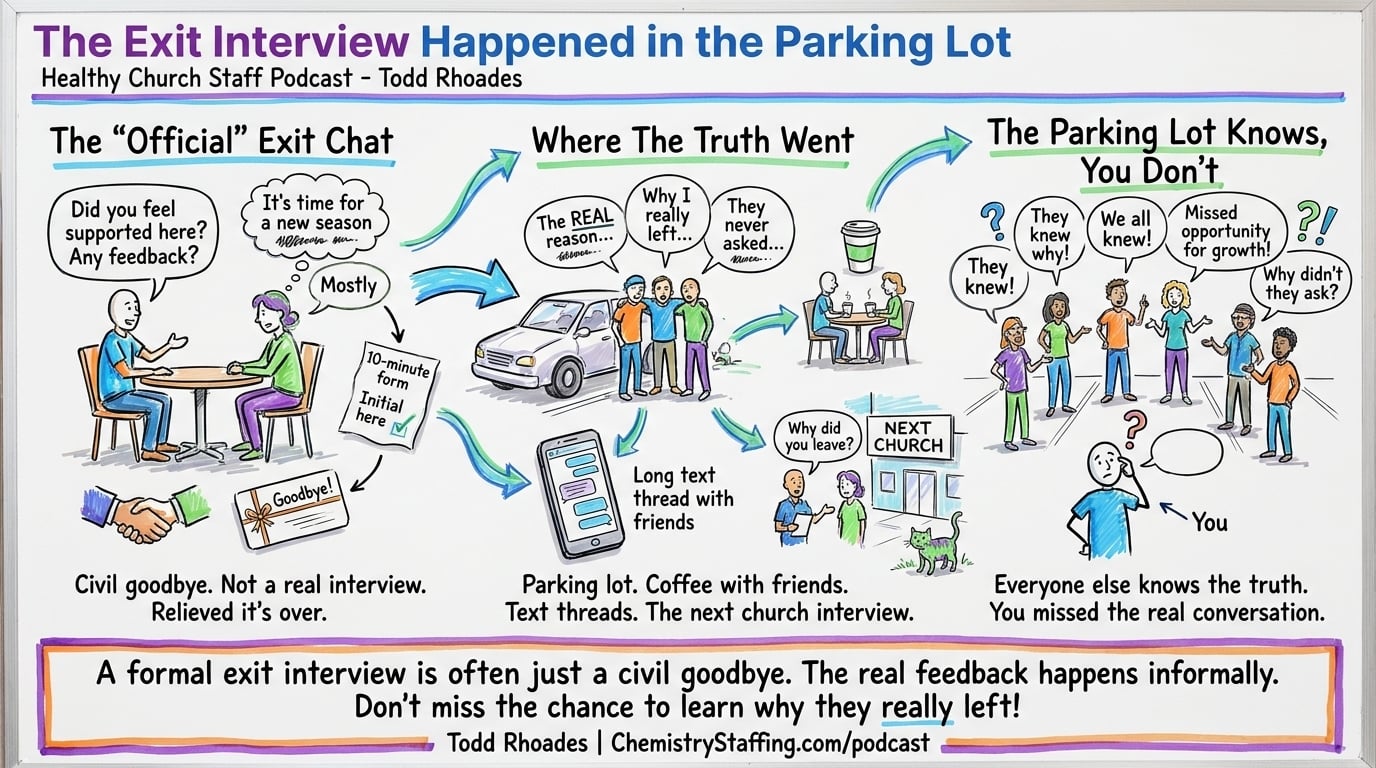
Here's what keeps me up at night: The parking lot already knows why they left. Their close friends already know. The church that just hired them definitely knows.
But you don't.
And that gap—between the polite goodbye and the real story—is costing your church more than you realize.
The Exit Interview That Happened Somewhere Else
Picture how it usually unfolds. The resignation letter is submitted. Their last Sunday gets circled on the calendar. You schedule a final conversation, and because you're a caring leader, you ask the standard questions:
"Did you feel supported here?"
"Mostly."
"Is there anything we could have done differently?"
"Not really. It's just time for something new."
You initial the HR paperwork. They smile. You smile. And honestly, you're relieved it stayed civil and clean.
But let's be honest—that wasn't an exit interview. That was a goodbye conversation with paperwork. The real exit interview already happened. It just happened somewhere else, and you weren't invited.
Where the Truth Actually Went
So where did the real story go? It went to:
- The parking lot conversation after their last service
- Coffee with a trusted friend from another church
- A long text thread with three people who used to work on your team
- The interview at their next church, when someone finally asked them the real question about why they left
And in those conversations? They told the whole story. The expectations that were never clarified. The leader who never gave feedback until it was too late (and that leader might have been you). The board that smiled and nodded but never followed through on what they promised. The job description that kept expanding while the support and salary stayed exactly the same.
You never heard any of it because you were never in the room. And more importantly, you never made room for that kind of honesty.
What Your Silence Actually Costs
When you skip the real exit conversation, here's what you lose:
You lose the pattern. Was this an isolated situation, or is this the third person who's left for the same reason? You'll never know because you're not collecting the data points that would reveal the trend.
You lose the early warning system. Whatever drove this person to leave is probably still wearing down the people who stayed. They're watching to see if you'll notice, if you'll ask, if anything will change.
You lose the opportunity to actually learn. Your congregation gets a nice announcement and a touching farewell. But your leadership team walks away having learned nothing that will prevent the next departure.
"Kindness without curiosity isn't care. It's just self-protection with a smile and a gift card."
Why We Avoid the Hard Conversation
Look, I get it. Exit conversations are awkward. Even in the best circumstances, they're uncomfortable. You have legitimate reasons for keeping things surface-level:
- You didn't want to push while they were still processing
- You worried a difficult conversation would sour the goodbye
- You hoped a clean exit would protect the church's reputation
- Honestly? Part of you was just relieved they were leaving peacefully
All of those concerns are legitimate. I'm not here to shame you.
But here's the problem: The issue isn't that you wanted peace. The issue is that you prioritized comfort over the one conversation that could actually help the people still on your team.
Peace that never asks "why" isn't peace at all. It's just organizational silence, and silence protects nothing except your own comfort.
A Word from Scripture
Proverbs 27:5-6 - "Better is open rebuke than hidden love. Wounds from a friend can be trusted, but an enemy multiplies kisses."
God's Word affirms that honest feedback—even when it stings—is an act of love and friendship, while avoiding hard conversations can actually harm relationships and organizations.
What a Real Exit Interview Actually Looks Like
So what should you do differently? Here's a framework that actually works:
1. Choose the Right Person to Conduct It
If the primary relationship wound involves their direct supervisor, that supervisor probably shouldn't be the one asking the questions. You already know this intuitively.
Instead, choose someone they trust—someone who's genuinely curious, someone who can hear hard things without getting defensive about you, the senior pastor, or the church as a whole.
2. Ask Three Crucial Questions (and Actually Write Down the Answers)
Here are the three questions that cut through the politeness:
- What made this job harder than it needed to be?
- What did leadership miss until it was too late?
- What should we change so the next person doesn't leave carrying the same story you're carrying?
Notice what these questions do: they assume problems existed (because they always do), they acknowledge leadership blind spots (because we all have them), and they focus on learning for the future rather than defending the past.
3. Document Everything and Bring It Where Decisions Get Made
The conversation is worthless if it doesn't travel beyond that room. Take detailed notes. Then bring those insights to your leadership team, your board, your staff meeting—wherever the decisions about culture and structure actually get made.
Action Step: The Retroactive Conversation
What if someone already left and you never had this conversation? If the relationship allows, reach out this week. Not to win them back—just to learn.
Try this script: "I should have asked you this sooner. What do I need to hear so we don't keep repeating what happened with you?"
Then be quiet and listen. Really listen.
Before the Next Person Leaves
Here's the thing we talk about constantly at Chemistry Staffing: everyone has a transition story. Some people say, "I just felt God leading me elsewhere." And sometimes that's the complete truth.
But often, it's "God is leading me elsewhere because..." And it's that "because" you desperately need to understand.
The real tragedy isn't that people leave churches. People leave jobs—that's normal, that's life, that's ministry. The tragedy is when they leave and the leaders learn nothing that would help the people who stayed.
"If the real story of why they left only got told in the parking lot, you didn't just lose a staff member. You lost the truth your church still needs."
Your Challenge This Week
This is simple to understand but hard to do:
Take the last person who left (or the next person who's preparing to leave) and schedule a real exit conversation.
It doesn't have to be you conducting it—maybe it's an elder, a board member, or another staff member they trust. But make it happen.
Ask the three questions. Write down what you hear. And then—this is crucial—bring those three insights into the room where decisions actually get made.
Someone has already told the truth about your staff culture. They're just not telling you.
The question is: are you going to keep letting the parking lot be better informed than your leadership team?
Discussion Questions for Your Team
- On a scale of 1-10, how safe do you feel sharing honest concerns with your supervisor? What would need to change to move that number higher?
- Have we experienced situations where team members left without us really understanding why? What patterns do we notice?
- What current systems do we have for honest feedback? Are they actually working, or just checking a box?
- What's one specific thing we can do this week to create a culture where parking lot exit interviews become unnecessary?
Let's Keep the Conversation Going
Getting through transitions is important. But learning from them and making things better for your current team? That's essential.
If you're wrestling with staff retention, cultural issues, or finding the right people for your team, we'd love to hear from you. At Chemistry Staffing, we hear transition stories every single day, and we're passionate about helping churches build healthier teams.
Have thoughts on this topic? Hit reply and send us your story at podcast@chemistrystaffing.com. We read every email, and your experience might help another church leader who's facing the same challenge.
Because here's the truth: the parking lot conversations are going to happen whether you like it or not. The only question is whether you'll have the courage to invite that honesty into your office before people feel like they have to wait until they're walking out the door.
This post is based on Episode 737 of the Healthy Church Staff Podcast. Want to dive deeper into building healthy staff culture? Subscribe to the podcast for weekly conversations about the real challenges of church leadership.