

It's that time of year again. Your youth pastor just asked if he needs to bring a lawyer to his performance review meeting. Your worship leader is suddenly updating his resume. And your administrative assistant keeps nervously asking what she did wrong.
🎧 Listen to this episode:
Meanwhile, you're staring at a generic template you downloaded from somewhere, wondering how on earth you're supposed to evaluate someone's "heart for ministry" on a scale of 1 to 10.
Sound familiar? If you're a church leader who either dreads giving performance reviews or struggles with receiving them, you're definitely not alone. Let's talk about how to transform this dreaded annual ritual into something that actually helps your team grow.
Why Church Performance Reviews Feel So Awkward
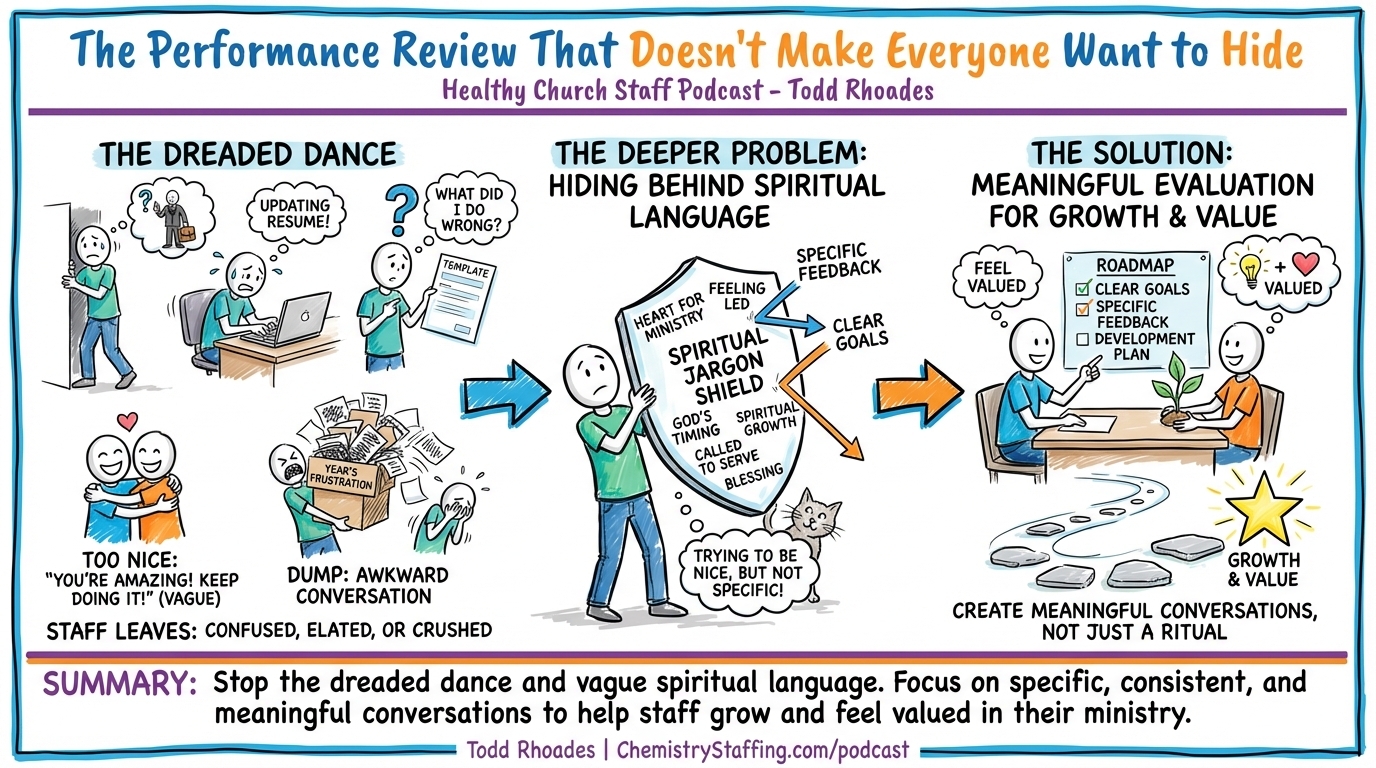
Performance reviews in churches have become this strange dance that nobody really enjoys. We tend to swing between two equally unhelpful extremes:
Option 1: The "Everything is Awesome" Approach
"You're amazing! Keep doing what you're doing! You're great! You're awesome!" Your staff leaves feeling good but with zero actionable feedback for growth.
Option 2: The Annual Frustration Download
We save up a year's worth of concerns and dump them all in one incredibly awkward conversation. Your staff member leaves feeling completely crushed and wondering if they should start looking for another job.
Neither approach actually helps anyone grow, and both leave your team either confused, elated, or absolutely devastated.
The Real Problem: Spiritual Smokescreen
But here's the deeper issue we need to address: in church environments, we often hide behind spiritual language instead of being specific and helpful.
We say things like:
- "Pray about your leadership style"
- "Trust God with your time management"
- "Ask the Lord to show you areas for growth"
Now, don't get me wrong—spiritual growth is absolutely important. But vague spiritual platitudes aren't actionable feedback. Adding "Jesus words" to unclear guidance doesn't make it more helpful; it actually makes it more frustrating.
"Good intentions need good systems. You genuinely want to help your staff grow spiritually and professionally—that's beautiful. But you need practical frameworks to make that happen."
A Better Way: The Growth Conversation Framework
Instead of dreading performance reviews, what if we reframed them as "growth conversations"? Here's how to structure these discussions in a way that actually builds people up:
Start with Specific Wins
Even if the overall conversation needs to address some challenges, always begin by naming specific things your staff member is absolutely crushing. Not generic praise like "you're great with people," but detailed, specific affirmation:
"The way you handled the Henderson family crisis last month was incredible. You were pastoral, wise, and you provided exactly the kind of care they needed in their moment of grief. You really knocked it out of the park there."
This isn't about inflating egos—it's about helping people recognize their strengths so they can build on them.
Address One Growth Edge (Not Seven Problems)
Here's a crucial principle: focus on one area for growth, not a laundry list of every issue you've noticed. Make it about their future potential, not your accumulated frustrations.
Ask questions like: "What would help you win even more in this area?" or "What support do you need to take your impact to the next level?"
This shifts the conversation from criticism to coaching, from problems to possibilities.
Create an Ongoing Rhythm
Here's what needs to change immediately: stop saving everything for the annual review. Don't wait until December 29th to bring up every concern from the past twelve months.
Instead, establish regular monthly check-ins. These don't have to be formal or lengthy. Just ask:
- "How are you feeling about your role right now?"
- "What's working well for you?"
- "What's not working?"
- "How can I help you succeed?"
This ongoing rhythm allows your formal review to be a summary of conversations you've already been having, rather than a blindsiding surprise.
Biblical Foundation for Healthy Feedback
Proverbs 27:5-6: "Better is open rebuke than hidden love. Wounds from a friend can be trusted, but an enemy multiplies kisses."
Ephesians 4:15: "Instead, speaking the truth in love, we will grow to become in every respect the mature body of him who is the head, that is, Christ."
Honest, caring feedback is actually an expression of love. When we speak truth in love, we help people grow in their calling and ministry effectiveness.
What Your Staff Should Walk Away Knowing
When your performance review conversation ends, your staff member should leave knowing three essential things:
- They're valued - Not perfect, but genuinely appreciated for their contribution
- They're growing - Not finished, but clearly on the right track
- You believe in their future - You see potential and want to invest in their development
This is the kind of review that builds healthy culture instead of breaking it down. Your goal isn't to create anxiety or competition—it's to help people flourish in their calling.
Your Next Step: Start Small
Here's your challenge for this week: schedule a 15-minute coffee meeting with one staff member. Don't call it a performance review—just take them off-site and ask, "How are you feeling about your role right now?" Then listen. Really listen.
If your immediate thought is, "They'll think something's wrong if I want to meet with them," that might tell you something important about your current culture. If your staff members assume they're in trouble when you want to spend time with them, that's a signal that change is needed.
Your team needs to know they matter. When you start there, everything else becomes easier.
Discussion Questions for Your Leadership Team
- How can we create a culture where feedback feels safe and encouraging rather than threatening?
- What would change about our evaluation process if we focused on calling development rather than performance metrics?
- What specific questions could we ask that help people reflect on their spiritual and professional growth?
- How might better evaluation conversations impact our entire church community?
The Bottom Line
A good performance review should make your staff want to stay and grow, not polish their resume and run for the exit.
Remember: you're not just managing employees—you're shepherding people who have been called to ministry. Treat their development with the care and intentionality it deserves. When you invest in your team's growth with wisdom and love, you're not just improving your church's effectiveness—you're participating in God's work of developing His servants.
Start with that 15-minute coffee conversation this week. Ask how they're feeling about their role. Listen well. You might be surprised by what you learn and how much it strengthens your team culture.
What's your experience with church staff performance reviews? What has worked well, and what challenges are you still navigating? I'd love to hear your thoughts and questions. Send them my way at podcast@chemistrystaffing.com.
Looking for a comprehensive performance review template designed specifically for church staff? Reach out to the email above, and I'll send you information about our detailed resource that includes templates and walks you through the entire evaluation process.